
If you've ever wondered how much money YouTube pays per view, the honest answer is: it depends. There's no fixed rate that YouTube pays for every view. Instead, your earnings are shaped by where your viewers live, what topic you cover, how long people watch, and whether an ad even had the chance to play.
In this guide, we'll break down exactly how much YouTube pays per 1,000 views in 2026, what changes those numbers, and how creators can earn more from the views they already have — including a repurposing strategy most channels overlook. If you want the shortcut to putting it into practice, Video Cutter AI can help you Turn Long Videos into Viral Shorts — and we'll show you why that matters for your earnings.
How Much Can 1,000 YouTube Views Earn?
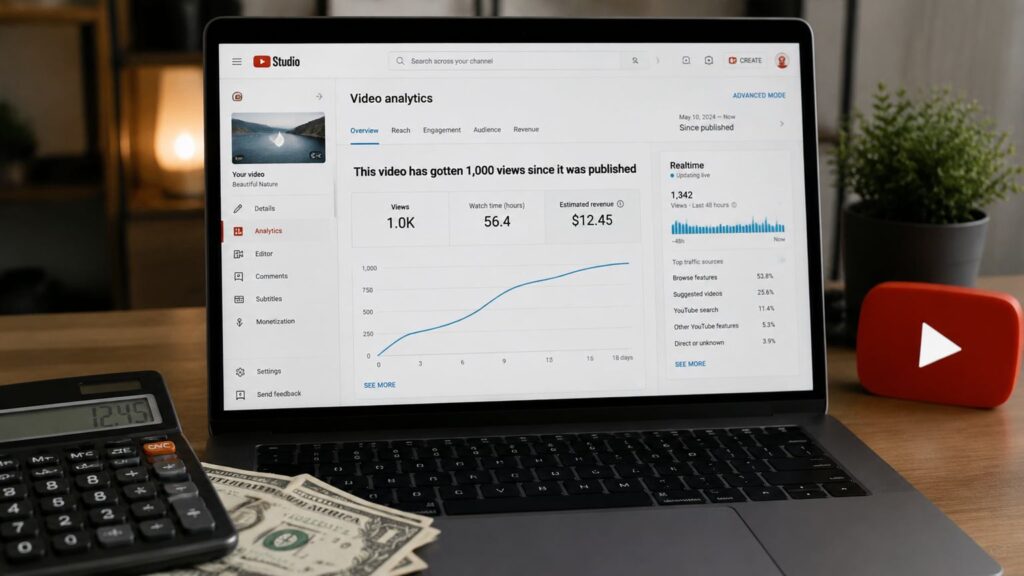
For most creators, 1,000 YouTube views earn somewhere between $2 and $10, with $3 to $5 being the most common range. That number is officially called RPM (Revenue Per Mille) — the amount you actually take home per 1,000 views after YouTube's cut.
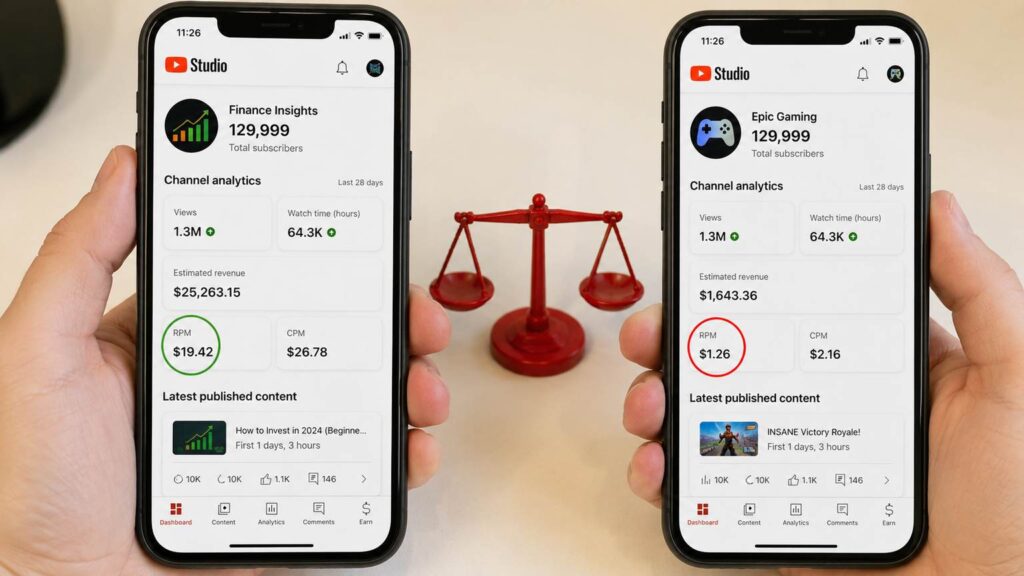
But that "average" hides a huge spread. A finance or business channel with a US audience can earn $9 to $20 per 1,000 views. A gaming or entertainment channel with a global audience might earn closer to $1 to $3. Two creators with identical view counts can end up with a 5x to 10x difference in earnings — purely because of who's watching and what the video is about.
Why 1,000 YouTube Views Can Be Worth Different Amounts
RPM vs. CPM: Two Metrics, Only One That Matters
RPM stands for Revenue Per Mille — "mille" meaning thousand. It's calculated as:
RPM = (Total Earnings ÷ Total Views) × 1,000
RPM includes every revenue source tied to your channel: ad revenue, YouTube Premium revenue, Super Thanks, and channel memberships. You can find your actual RPM in YouTube Studio under Analytics → Revenue, and YouTube's own Analytics glossary explains how the metric is defined.
CPM (Cost Per Mille), by contrast, is what advertisers pay YouTube per 1,000 ad impressions — the number before YouTube's cut and before unmonetized views are factored in. A video with a $20 CPM doesn't mean you earn $20 per 1,000 views; that $20 CPM often turns into an RPM closer to $8–$11. Whenever you estimate your own earnings, work from RPM, not CPM.
Viewer Location and Ad Demand
Advertisers bid differently depending on where your audience lives, because purchasing power and ad markets vary by country. Viewers in the US, Australia, Canada, and the UK typically generate the highest ad rates, while audiences in lower ad-spend markets bring in a fraction of that. Importantly, this is based on where your viewers are, not where you live — a creator anywhere in the world can earn top-tier rates if most of their audience is in a high-demand country.
Content Niche and Advertiser Value
Your topic determines who's bidding to advertise on your videos. Finance, business, and software topics attract advertisers willing to pay premium rates because their potential customers have high lifetime value. Gaming, comedy, and general entertainment attract lower-paying advertisers, even with massive view counts. This is why a smaller finance channel can out-earn a much larger gaming channel — the audience an advertiser is trying to reach matters more than raw view count.
Seasonality: Why Your RPM Changes Month to Month
Advertiser demand isn't constant — it rises and falls with the calendar, and your RPM follows. Ad rates typically climb in the fourth quarter as brands fight for attention ahead of the holiday shopping season, then dip in January when ad budgets reset. Back-to-school content around August and finance or tax content in the first quarter can see temporary RPM spikes of their own. The practical takeaway: if your earnings dip in a particular month, it isn't necessarily your content — it may just be the season. Compare your monthly numbers against the same month last year, not against your best month ever.
Not Every View Is Monetized
Only monetized views — ones where an ad actually ran — generate direct ad revenue. Some viewers use ad blockers, some have YouTube Premium (which pays creators differently), and sometimes YouTube simply has no ad to serve. A video can rack up thousands of views with a limited-ads flag (often shown as a yellow icon in YouTube Studio) and earn close to nothing from ads. This is one of the main reasons raw view count alone is a poor predictor of earnings.
What 1,000 Views Earn Across Niches and Scales
Typical RPM by Niche
| Niche | Typical RPM | Example Content |
| Finance / Business | $9–$20+ | Investing tutorials, personal finance advice |
| Tech / Education | $5–$12 | Software reviews, online courses |
| Lifestyle / General | $2–$4 | Vlogs, travel, everyday how-tos |
| Gaming / Comedy | $1–$3 | Gameplay, sketches, reaction content |
| YouTube Shorts | $0.03–$0.08 | Any niche, short-form format |
Lined up this way, the range is easy to see: a gaming channel sitting near $1–$3 RPM and a finance channel sitting near $9–$20 RPM can post videos with the exact same view count and land up to 10x apart in earnings — and Shorts sit in a category of their own.
What 10K, 100K, and 1 Million Views Pay
Scaling the same RPM ranges up gives a clearer picture of what real channels earn:
| Views | At $2 RPM | At $5 RPM | At $10 RPM |
| 10,000 | $20 | $50 | $100 |
| 100,000 | $200 | $500 | $1,000 |
| 1,000,000 | $2,000 | $5,000 | $10,000 |
A million views on a gaming channel and a million views on a finance channel can produce wildly different paychecks — sometimes a 10x gap or more. A bigger number of views doesn't cancel out a low RPM; it just multiplies it.
How Much YouTubers Earn per Month
| Channel stage | Monthly views | Typical monthly earnings |
| Early stage | Under ~20,000 | $20 – $300 |
| Growing | 50,000 – 150,000 | $400 – $1,500 |
| Established | 250,000+ | $2,000 – $5,000+ |
Most channels at the early stage earn modest amounts — full-time income from ads alone usually doesn't arrive until a channel is well established. And consistent five-figure monthly incomes almost always involve sponsorships, products, or courses on top of ad revenue; ads are rarely the whole story.

How Much Does YouTube Pay Per View?
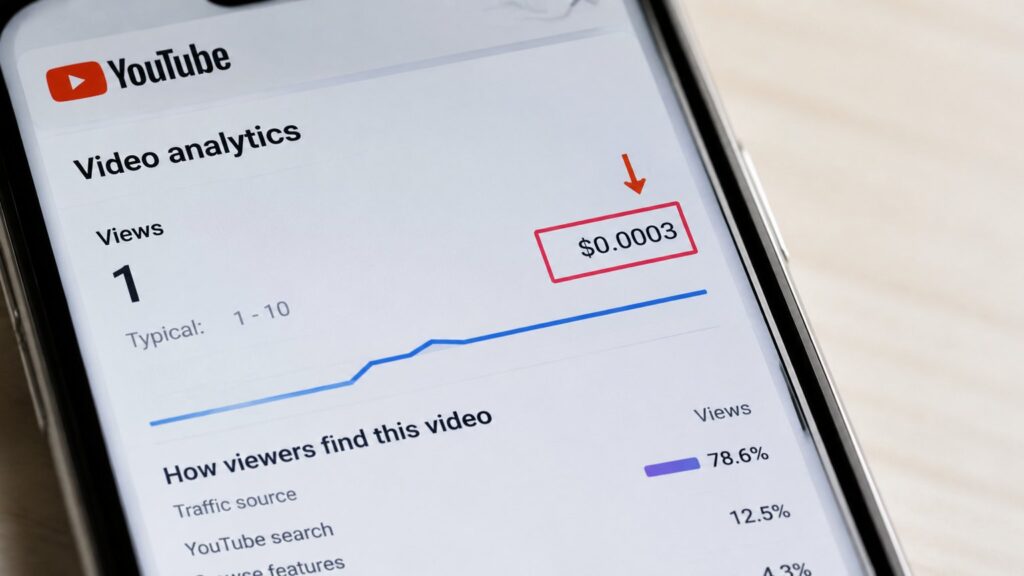
Broken down to a single view, the numbers get tiny fast: at a $5 RPM, one view is worth about half a cent. That's exactly why creators talk in terms of "per 1,000 views" or "per million views" instead of per view — the per-view number alone isn't meaningful until you multiply it across real volume.
How Many Views Do You Need to Make $100 or $1,000?
At a $2 RPM, you'd need about 50,000 views to earn $100, and roughly 500,000 views to reach $1,000. At a $10 RPM, those same goals are reachable at just 10,000 and 100,000 views respectively. The same income target can require 5x more views depending entirely on niche and audience — the clearest illustration of why "grow views" isn't the only lever creators should be pulling.
How Much Do YouTube Shorts Views Pay?
Why Shorts Pay So Much Less
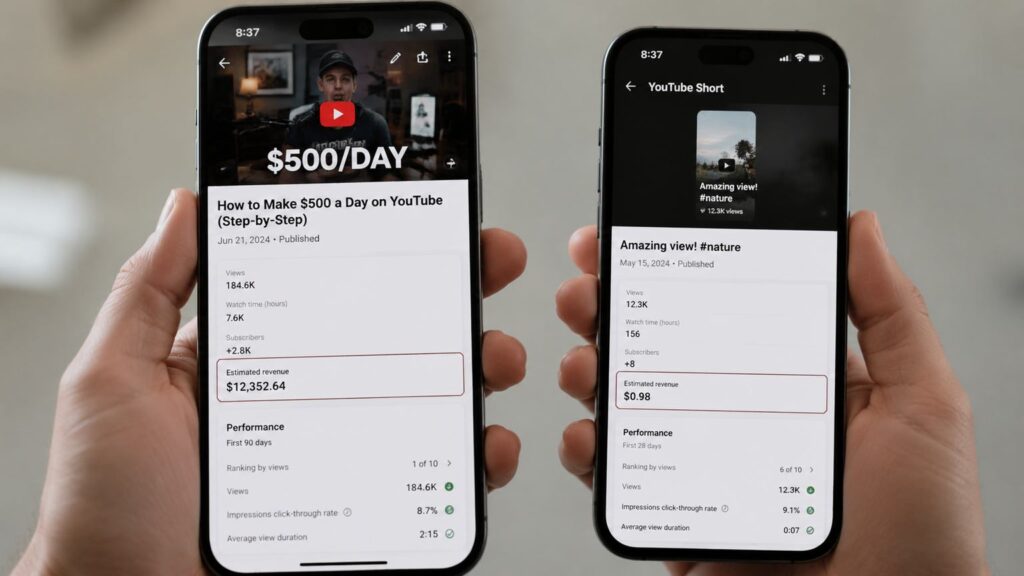
Shorts don't run ads directly on individual videos. Instead, ad revenue from the entire Shorts feed is pooled and distributed across creators based on their share of total Shorts views that month. Creators also keep a smaller share of Shorts revenue than they do on long-form videos, and background music can reduce that share further. The result: Shorts typically earn $0.03 to $0.08 per 1,000 views — dramatically lower than long-form RPM, sometimes by 95% or more.
When Shorts Are Still Worth It
Low per-view earnings don't mean Shorts aren't worth making. Shorts are one of the best free discovery tools on the platform — they get pushed to new audiences far more easily than long-form videos, and a well-performing Short can bring in subscribers who go on to watch (and generate real ad revenue from) your long-form content.
How to Increase the Value of Your YouTube Content
Focus on Topics With Strong Viewer Demand
Choosing topics that naturally attract advertiser interest — and that appeal to audiences in higher-paying regions — has a bigger impact on your earnings than almost any other single decision. This doesn't mean abandoning your niche, but it's worth knowing which topics carry a natural RPM advantage.
Improve Retention Before Chasing More Views
Ads (especially mid-roll ads on longer videos) only count if viewers stick around long enough to see them. Improving average view duration means more of your existing views actually convert into monetized ones, which raises your RPM without needing a single additional view — and longer watch time is one of the biggest levers on your YouTube earnings per view.
Retention isn't just about scripting — it's also about editing. Tighter cuts, a stronger hook in the first few seconds, and clips pulled from your best moments all keep viewers watching longer, which is exactly what turns a low-RPM video into a higher-earning one.
Turn Long YouTube Videos Into Shorts With Video Cutter AI
Since editing quality directly affects retention — and retention is one of the biggest levers on RPM — the fastest way to raise the value of your views is to make better use of the footage you already have. Pulling strong, well-edited moments out of your long videos does double duty: it improves retention on the clips themselves, and it uses Shorts to fuel your long-form growth. The easiest way to do that consistently is to stop treating every clip as a separate project and instead pull multiple Shorts out of every long video you already publish.
That's exactly what Video Cutter AI is built for.
Find the Best Moments From Long Videos
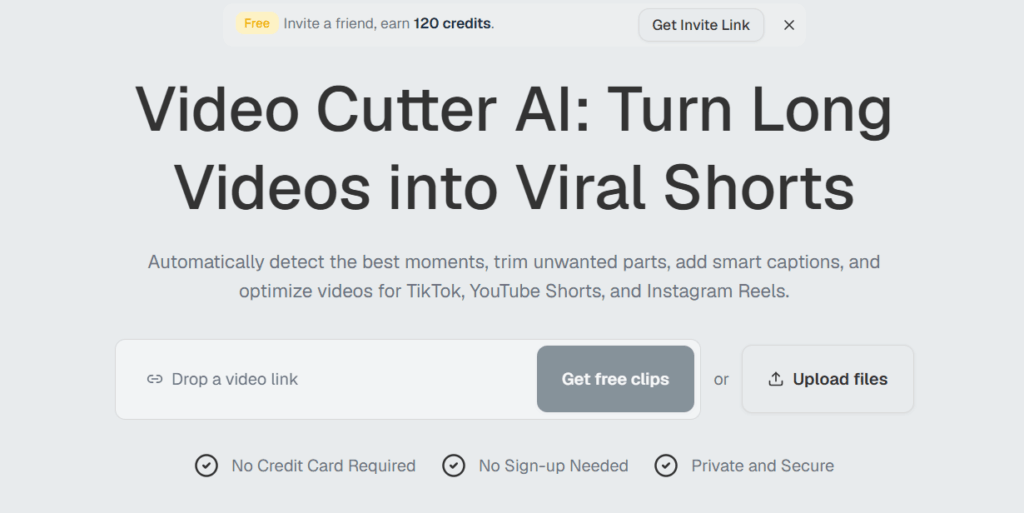
Video Cutter AI analyzes your long-form video and identifies the moments most likely to work as standalone clips, so you're not scrubbing through footage manually looking for a hook.
Create Short Clips Without Starting From Scratch
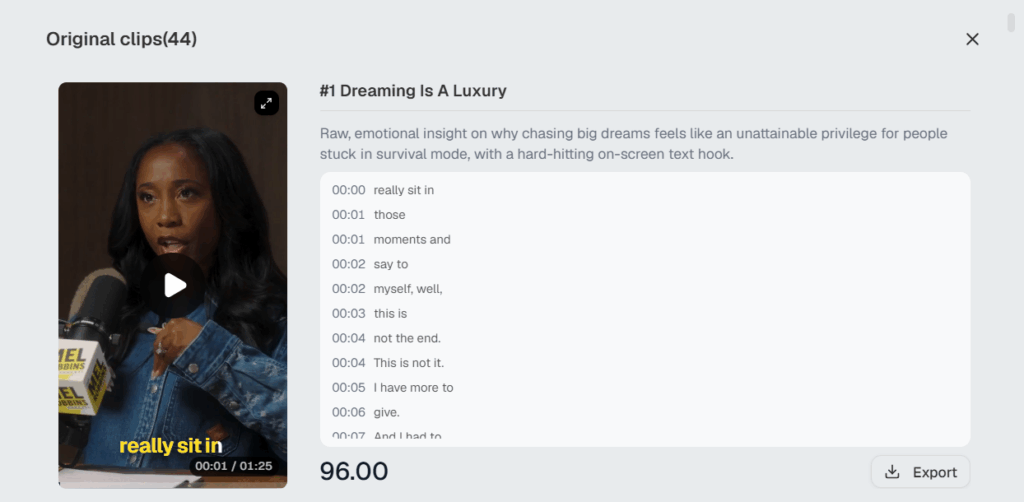
Instead of re-recording or re-editing separate content for Shorts, you get short, ready-to-post clips pulled directly from videos you've already made — turning one upload into several pieces of content.
Add Captions and Reframe Videos for Shorts
Clips are automatically reframed for vertical formats and captioned, so they're ready for TikTok, YouTube Shorts, and Reels without extra editing work on your end.
Repurpose One Video for Multiple Platforms
One long video can become a full week of short-form posts across platforms, which means more total views, more discovery, and more chances to funnel viewers back to the long-form videos where your real ad revenue is earned.
Try Video Cutter AI to see how many clips your next long video could produce.
YouTube Earnings FAQs
How much are 1,000 YouTube views worth?
Most creators earn between $2 and $10 per 1,000 views, with $3 to $5 being the most common range. That number is your RPM — the amount you take home after YouTube's cut — and it varies widely by niche: finance and business channels with US audiences often earn $9 to $20 per 1,000 views, while gaming or comedy channels with global audiences typically earn closer to $1 to $3. Your audience's location, video length, and how many of your views actually show ads all push your RPM up or down, which is why two channels with identical view counts can earn 5x to 10x differently.
How much does YouTube pay per million views?
At a $2 RPM, 1 million views earns around $2,000; at a $5 RPM, around $5,000; and at a $10 RPM, around $10,000. The gap comes down entirely to niche and audience location — a finance channel's million views can be worth 10x a gaming channel's. And because not every view is monetized (ad blockers, YouTube Premium, and limited-ads videos all reduce the count), the real figure is often lower than a straight RPM calculation suggests. The bigger your RPM, the more each million views pays — which is why improving RPM matters as much as growing views.
How much money does YouTube pay per view?
A single view is worth a tiny fraction of a cent — at a $5 RPM, roughly half a cent per view. That's why earnings are almost always discussed per 1,000 views or per million views rather than per individual view: the per-view number alone isn't meaningful until you multiply it across real volume. At a $2 RPM you'd need about 50,000 views to earn $100 and 500,000 views to earn $1,000; at a $10 RPM those same goals need only 10,000 and 100,000 views. The per-view figure only matters in bulk.
Do YouTube Shorts pay for views?
Yes, but at a much lower rate than long-form videos — typically $0.03 to $0.08 per 1,000 views, sometimes 95% less than long-form RPM. That's because Shorts don't run individual ads; ad revenue from the entire Shorts feed is pooled and split among creators based on monthly view share, and creators keep a smaller percentage than on long-form. Even so, Shorts remain one of the best free discovery tools on YouTube — a well-performing Short can pull in subscribers who go on to watch your long-form videos, where the real ad revenue is earned.
Do all YouTube views make money?
No. Only monetized views — ones where an ad actually played — generate direct ad revenue. Views from ad-block users, YouTube Premium subscribers (who pay creators through a separate revenue pool), and videos flagged as limited-ads (the yellow icon in YouTube Studio) all count as views but produce little or no ad income. That's why raw view count alone is a poor predictor of earnings; what matters is how many of those views were monetized playbacks.
How can I earn more per view?
Three levers matter most. First, target topics and audiences with higher advertiser demand — finance, business, and software content aimed at high-paying regions like the US and UK naturally carries a higher RPM. Second, improve retention: longer average view duration means more of your views become monetized, which raises RPM without a single additional view, and tighter editing is one of the fastest ways to get there. Third, repurpose every long video into Shorts — they pay little on their own, but they drive new viewers back to your long-form content, where your real earnings happen.
Final Takeaway: What Are 1,000 YouTube Views Really Worth?
There's no single number that answers the question "how much does YouTube pay per 1,000 views" for every creator — it depends on your RPM, and RPM depends on your niche, your audience's location, and how much of your content actually gets watched with ads attached. What you can control is how efficiently you turn the views you already have into more opportunities: better retention, smarter topics, and repurposing every long video into short-form content that keeps bringing new viewers back to where your real earnings happen. And when you're ready to put that strategy into practice, Video Cutter AI does the heavy lifting for you — turning every long video you publish into a steady stream of ready-to-post clips, so your views and the earnings that come with them keep compounding.